Every owner-operator knows the phone call. Mid-morning, the shop's number on the screen, and a guy who opens with "so we got it up on the lift." You already know there's a number coming. The only thing you don't know yet is whether it's a number you have.
That part got decided months ago. It got decided by whether you've been putting money aside per mile, and how much. Most people picked that figure years ago and haven't looked at it since.
ATRI put out its cost report this summer. Repair and maintenance is up 45% since 2019. Not the price of a new truck. What it costs to keep the one you've already got.
What the number actually is
ATBS keeps the books for thousands of owner-operators. Their figure for 2025 was $14,222 in truck and trailer maintenance, on about 95,000 miles. Divide it out. Fifteen cents a mile, near enough.
That's an average, so read it like one. It's got trucks still under warranty in it. It's also got 900,000-mile trucks that ate a turbo that year. Yours is in there somewhere, and you probably already know which half.
Fifteen cents across 95,000 miles is about $14,250 a year. Call it $1,190 a month that has to exist somewhere before the truck ever asks for it. Put away a nickel instead and you're funding a third of your own repair bill and borrowing the rest, whether that's a credit card, the shop's payment plan, or the oldest one in the business: not fixing it and hoping.
Why it moved
Four things stacked up, and none of them look temporary:
- Parts. Section 232 put 25% on imported Class 3–8 trucks and truck parts, plus 50% on imported steel and aluminum, which is most of what a frame or an axle is made out of.
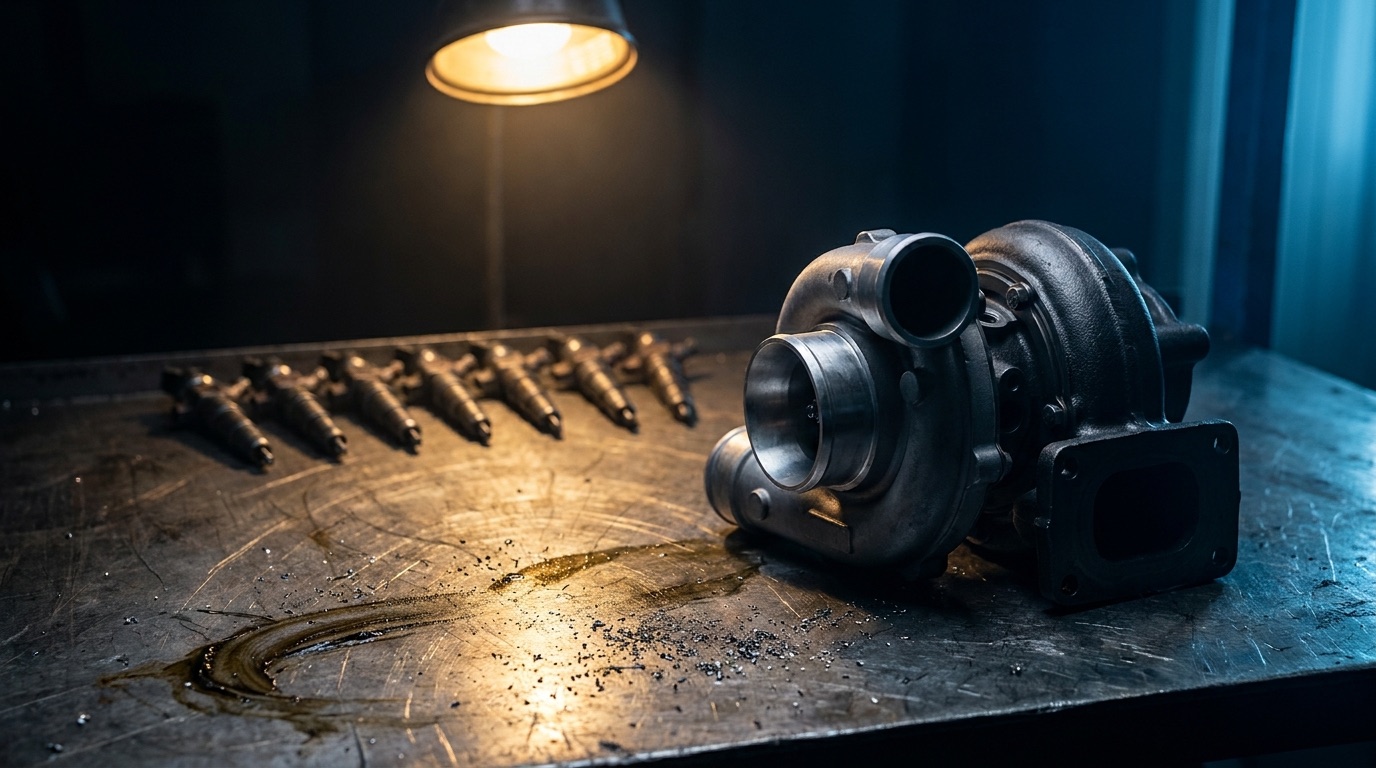
- The stuff that actually breaks. Decisiv's CEO told FreightWaves in May that the components failing on high-mileage trucks run 20 to 30% more than before the tariffs tightened up. An injector set that used to be $1,800 is closer to $2,200. A turbo that was $900 is more like $1,100 now.
- Tires. Up 6.4% last year by ATRI's count, and mostly imported.
- Shop time. The diesel tech pool is thin and the backlogs show it. A week waiting on a bay costs you the same as a week waiting on a part, and you can't do a thing about either one.
ATRI's all-in number for 2025 was $2.336 a mile to run a truck, the highest they've ever recorded. Take fuel out of it completely and costs still went up 4.2%. Fuel gets all the attention because the price is posted on a sign you can read from the interstate. Everything without a sign on it went up faster, and quieter.
Setting one that survives a bad month
- Fifteen cents, not five. If your truck is new and under warranty you can run lighter than that for now. Bank the difference anyway. The warranty runs out and the reserve is what's standing there when it does.
- Move the money the day you get paid. A reserve you fund with whatever's left at the end of the month isn't a reserve. There's never anything left at the end of the month.
- Separate account. Money sitting next to the fuel money gets spent on fuel. Every time.
- Tires get their own line. A full set isn't a surprise. It's a scheduled four-figure bill you can see coming a year out. Fund it from the same pot as the actual surprises and something's going short, and it won't be the surprise.
- Price reman before you price new. Remanufactured turbos, injectors and DPF assemblies generally run 30 to 70% under new at the same spec. On a part carrying a tariff, that spread is the difference between writing a check and signing a payment plan.
What you're actually buying
There are two versions of that bill. The scheduled one ruins an afternoon. You're irritated, you eat a day, you move on. The other one rearranges the whole month. Same part either way.
The difference was never the repair. It's who picked the time and the place. Somebody with fourteen grand in the account gets to say Thursday, his own shop, his own schedule, and a Tuesday problem turns into a Thursday errand. Somebody with nine hundred takes whatever the shoulder of the interstate is offering, at whatever the tow company feels like charging, on a load that's already late. Roadside runs three to four times what the same repair costs caught early. There's a full breakdown of that math here.
Nobody loses a truck over a water pump. They lose it because the water pump showed up in a week that had nothing behind it. And that's what makes it maddening. The fix is so boring. It's a transfer. It's the least interesting thing you'll do all month, and it's the whole difference between a bad Tuesday and the end of the thing you built.
Which means the fifteen cents has to come out of a rate that covers it. Most people are quoting themselves a cost per mile that's really just fuel and the truck payment, then wondering where the year went. Put the maintenance in there, run it through the cost calculator, and you'll see what a load actually has to pay before it's worth taking.