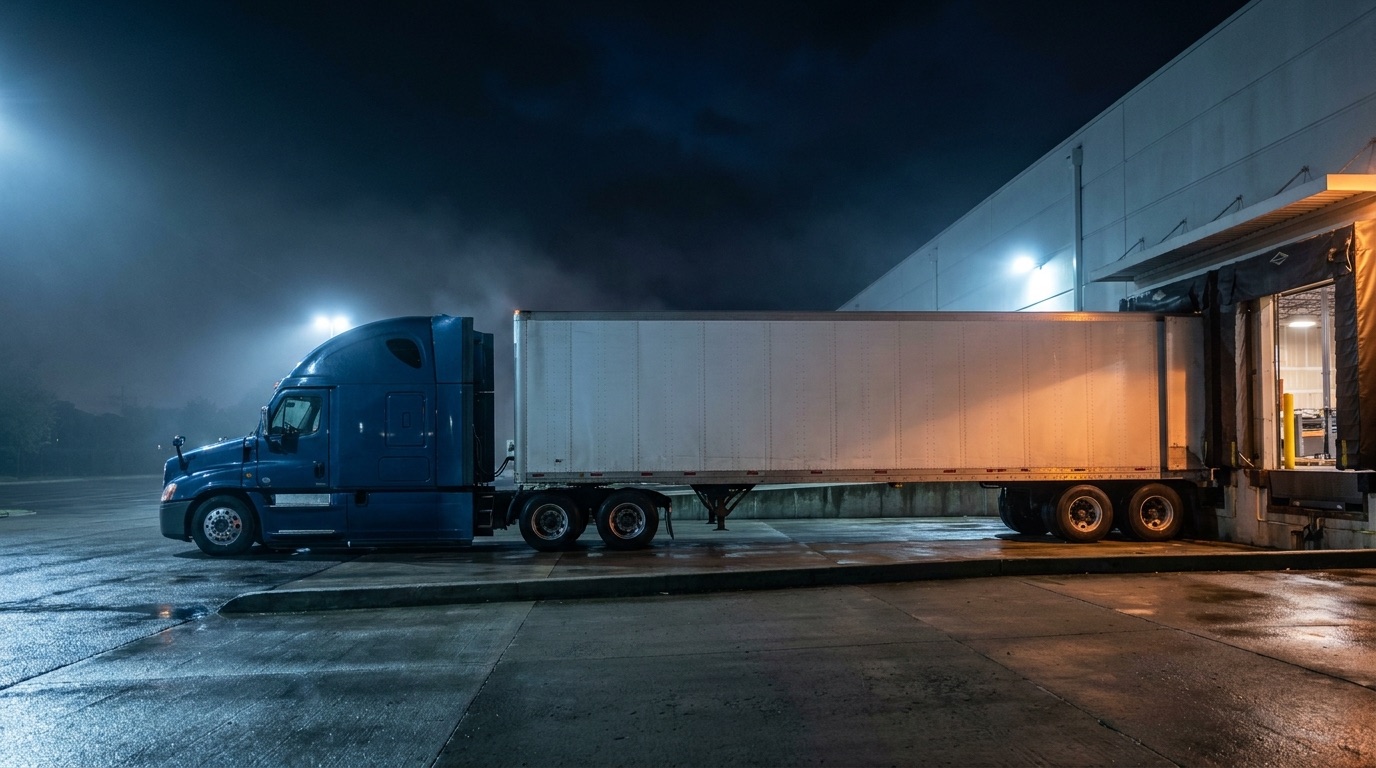
The most expensive hours of your week are the ones nobody is paying for. The truck is backed into a dock somewhere in the rain, the fourteen is burning, the load that could have been picked up tonight is going to somebody else — and the rate on the con hasn't moved a nickel since eight this morning.
DOT's Office of Inspector General put a number on it back in 2018: detention costs for-hire drivers somewhere between $1.1 and $1.3 billion a year in lost earnings. That's the industry figure. The one that matters is yours, and the reason most of it never gets collected is boring. Detention isn't something you argue for after the fact. It's something you set up before you load.
It has to be on the rate con before the wheels turn
The conversation that decides whether detention gets paid happens before anybody's sitting anywhere. Four things to find on the confirmation, in writing, every time:
- Free time. How long you're expected to be there for free. Two hours is the common one. Some cons say three. Some say nothing at all, which means it's whatever they decide later.
- The hourly rate. Commonly somewhere in the $30–$75 an hour range depending on the broker and the freight. A number in writing beats a promise on the phone every single time.
- The cap. This is the one people miss. Plenty of agreements stop paying after four, six, or eight hours — so a fourteen-hour hostage situation pays you for six.
- The notice rule. Most cons require you to notify them while you're still sitting, not when you invoice. Miss that window and the clause is technically satisfied and you're technically out of luck.
The clock has to be one somebody else can verify
Your word about when you got there is not evidence. The broker isn't being difficult about that; his customer will ask him the same question and he needs something to hand over. Build the record while you're there, because you cannot build it Thursday night from memory:
- In and out times on the BOL, written by the shipper or receiver, not by you. Ask at check-in. It's a normal request.
- The gate ticket if the facility issues one. That's a third party timestamping you for free.
- Your ELD stop record. Already running, already timestamped, already location-tagged. It's the cleanest proof in the truck.
- A photo of the dock at arrival. Timestamped, GPS-tagged, thirty seconds of work.
Say something while you're still sitting
Text the broker at the two-hour mark. Not a complaint — a timestamp. "Checked in 0730, still not in a door, detention clock started 0930." That message does two jobs: it satisfies the notice requirement, and it creates a written record on his phone that he has to answer for later. A broker who gets that text at 0930 usually starts working the receiver, because now it's his problem too. A broker who first hears about it on an invoice three weeks later has every reason to shrug.
Bill it — don't ask for it
Detention goes on the invoice as its own line item, with the signed times attached, the same week as the load. Not a phone call asking whether they'd consider it. An invoice is a document that gets processed; a request is a favor that gets forgotten. And when a broker who agreed to detention in writing simply refuses to pay it, that's an unpaid invoice like any other — which is exactly what the bond and the broker's payment history are there to tell you about before you take the next one from them.
And price the wait into the load
Here's the part that costs the most and shows up nowhere. A live-load, live-unload run into a grocery DC is not the same load as a drop-and-hook, even at the same rate per mile. If the lane routinely costs you four hours at the dock, that's four hours of your fourteen you cannot spend earning, and the real rate on that load is lower than the number on the con. Detention pay claws back some of it. Knowing which lanes eat your day is what keeps you from taking them at drop-and-hook prices. Run the load with honest dock time in the load check and you'll see the difference immediately — Areva keeps that clock in the math, so the rate she quotes you back is the rate you'll actually earn.